
See the defect before the guest does.
Threadscan
Quality control over the ironer line.
The Threadscan frame sits on the finishing line. Cameras and lights inspect every piece as it passes, without slowing the plant.
01 · Detection
Defects, classified the way your laundry works.
Stains, holes, marks. Threadscan scores what it sees against your categories and thresholds, not a generic demo set. Near-misses stay visible when you want them.
02 · Fit
Width built around the folder, not the other way around.
The frame spans about 3700 mm to 4600 mm. Legs and extension bays slide so the same design fits most flatwork ironers and folders. Watch it run out to maximum width.
03 · Optional RFID
Read the piece as it passes through the line.
Optional antennas turn the portal into a read zone. Tag the linen as it runs the ironer, then join that identity to the defect record in Threadscan.
04 · Line
The same cameras time the line.
Producing hours, stoppages and utilisation, not just defects. When the line pauses, you see it.
See how a laundry improved efficiency by 13.5% when they turned on Threadscan.
View the case study →Our industrial Threadscan inspection solution sits over your folder. Any folder, any make, any model. Stains, holes and other defects, classified at line speed, the way your laundry works. Designed to fit into your existing processes, not the other way around.
What it does
A camera over the folder that stops a bad product reaching the hotel.
Threadscan sits on the finishing line. It looks at every piece, names the defect, and tells the folder where to eject it, so the pack that leaves the plant is the one you meant to send.
-
01
Fed through the machine
The product leaves ironer or towel folder on the finishing belts. No extra handling, no slower line speed.
-
02
Defect detected
Cameras and lights on the Threadscan gantry inspect every piece as it passes underneath.
-
03
Type classified
Threadscan decides what it is (stain, hole, mark) against the classes and thresholds you set.
-
04
Folder ejects the product
A signal goes to the folder. The defective piece is dropped at the lane you configured.
-
05
Remedial treatment
That piece goes to rewash, rag-out or repair. It does not go into a hotel pack.
Clean pieces stay on the belt and stack as usual. Only the rejected piece leaves the line at the ejection point. Ready for rewash, rag-out or whatever treatment you run.
The console
The camera sees the product. The console is where the plant runs quality.
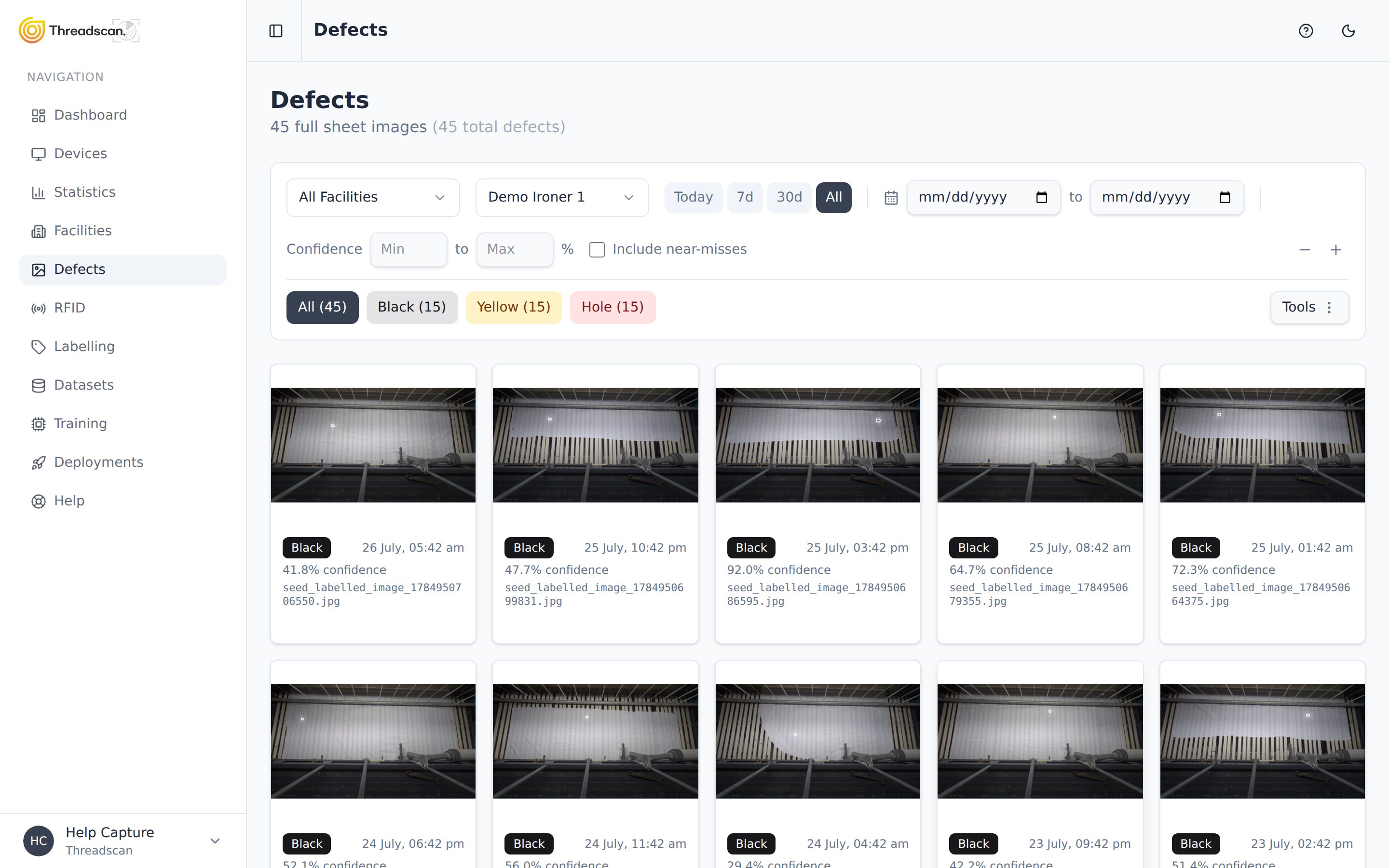
Every detection, stoppage and tag read lands in Threadscan. Review, measure, train and deploy from one place, or pull the same records into the systems you already run.
Operators do not have to guess what the camera saw. The defect gallery shows the full product, the class, a confidence score and when it ran, filterable by facility, machine, date and near-misses.
- · Flag a false call so it does not train the next model
- · Find similar detections across the day
- · Queue confirmed examples into labelling and datasets
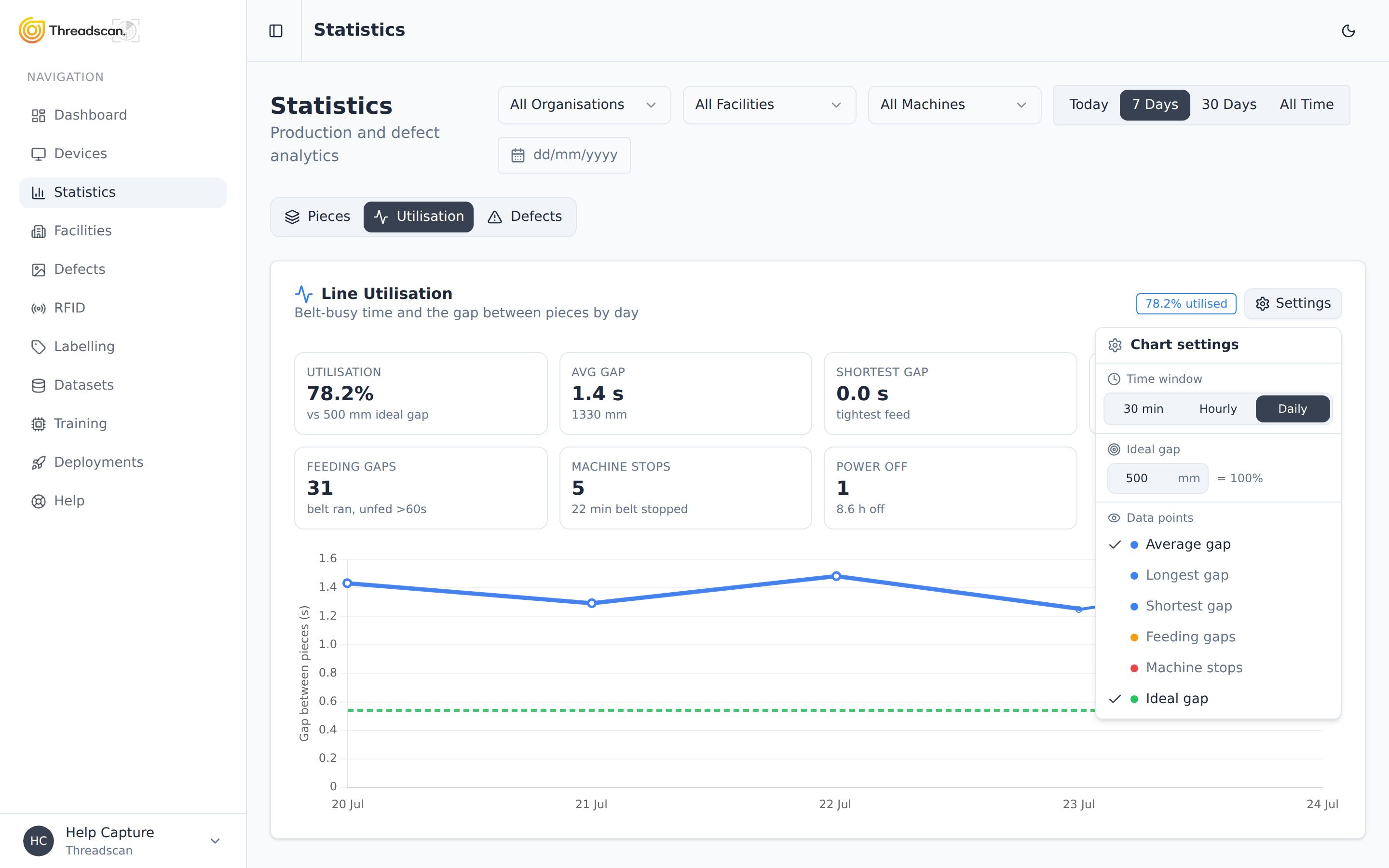
Most plants know what they produced. Few can say how the line actually ran. Threadscan measures production, utilisation and defects together, per machine, per facility, per shift, so the conversation moves from gut feel to numbers.
- · See the capacity you already paid for: gaps and idle time made visible
- · Know why output dipped: stoppages and downtime, quantified
- · Compare machines, shifts and sites on the same numbers
What a plant measured
Quality credits down. Same output in fewer hours.
Observational results from one finishing department after Threadscan and line reporting were live. Not a guarantee. You can request the case.
−0.0%
Product credit rate
Credits ÷ delivered products, on vs off period.
+0.0%
Pieces per producing hour
Same plant, after line reporting went live.
0 hrs
Fewer producing hours
Comparable piece volume across five-day windows.
Go deeper
More when you want it.
The full technical story lives one click away: the training loop, the API and item-level tracking.
Closed loop
The model gets better on your floor →
Install, detect, review, train, deploy, measure: the loop from camera mount to continuous improvement.
Open data
Your other software can read it →
Detections, production and RFID through the API, for the LMS, ERP and plant software you already run.
Optional RFID
Know which piece it was →
Antennas on the frame join tag identity to the defect record. Ask us when inventory visibility is the next problem.